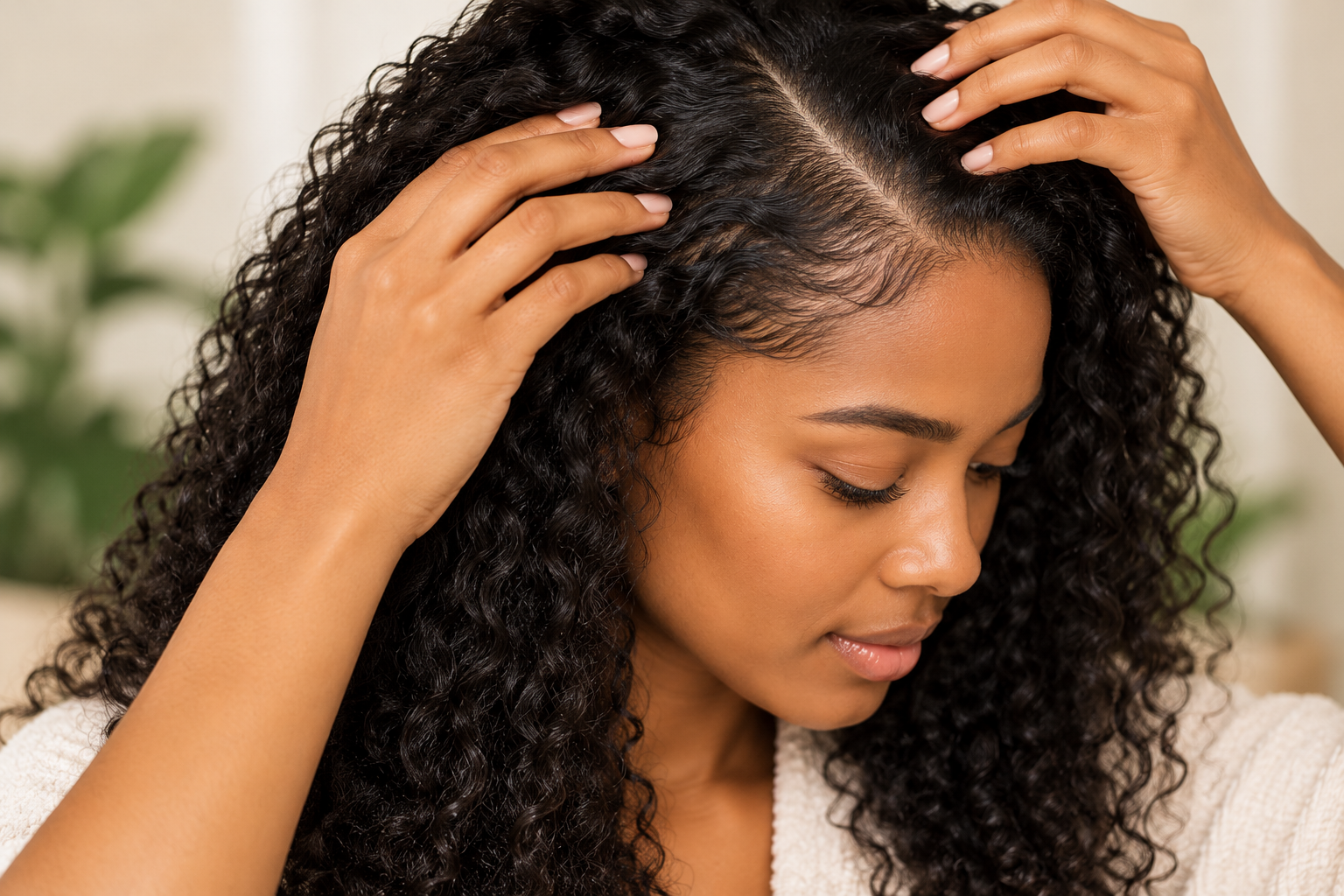
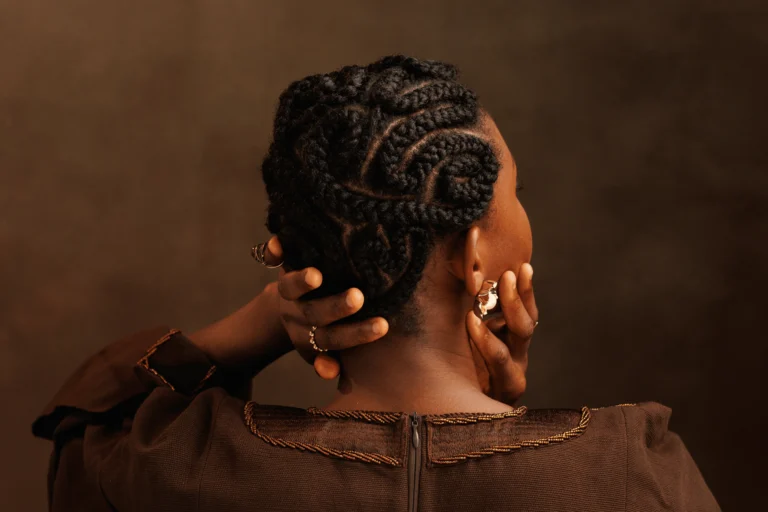
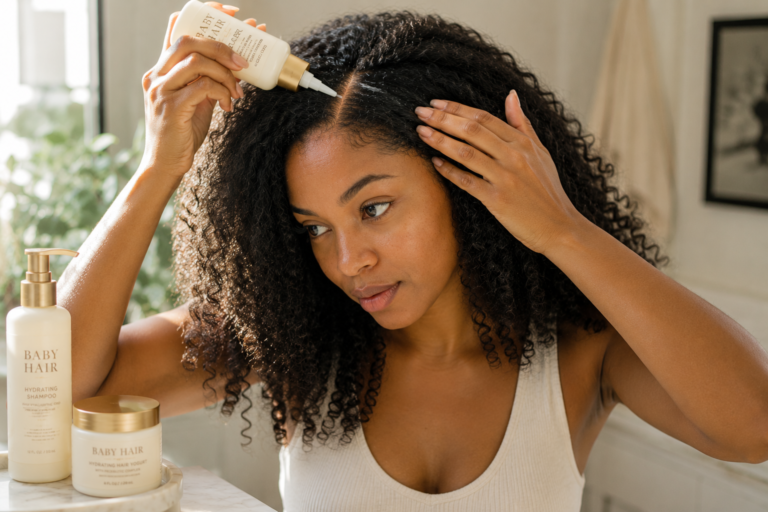
The hairline is one of the most visible—and frequently manipulated—areas of the head.
Edges may be brushed, gelled, pulled into ponytails, braided, slicked, laid, covered, uncovered, and restyled again.
Over time, all that attention matters.
If your hairline looks different than it used to, start by looking at the routine around it.
Start with tension
Ask yourself:
- Do my braids pull at the hairline?
- Are ponytails or buns consistently tight?
- Does my wig grip or adhesive area create repeated stress?
- Does my style hurt?
- Do I see small broken hairs around the edges?
- Am I repeatedly brushing the same area throughout the day?
Pain is not proof that a style is secure.
A hairstyle should not need to hurt to last.
Edge control is styling—not treatment
Edge-control products can help shape and hold the hairline.
They do not correct the reason an edge may look thinner.
Repeated layering of gels and edge products can also create buildup if the area isn’t cleansed appropriately.
Style the hairline gently and clean it intentionally.
Give the hairline recovery time
If one area is repeatedly exposed to tension, consider reducing that stress.
That may mean:
- changing where ponytails sit;
- loosening styles;
- leaving small hairs out of a braid;
- changing installation techniques;
- reducing repeated brushing; or
- giving the area time between high-tension styles.
Condition without drowning the area
A targeted oil may be part of your routine if your hair and scalp tolerate it.
But more oil does not automatically fix a hairline concern.
The hairline still needs:
- appropriate cleansing;
- gentle handling;
- reduced tension; and
- time.
Know when cosmetic care isn’t enough
Sudden hairline changes, smooth bald areas, significant scalp symptoms, or persistent loss should not be treated as simply a cosmetic styling issue.
Consider seeking evaluation from an appropriate healthcare professional.
Baby Hair® provides cosmetic hair-care and educational information. This content is not intended to diagnose, treat, cure, or prevent a medical condition and is not a substitute for individualized medical advice. Persistent, sudden, severe, or otherwise concerning hair or scalp changes should be discussed with an appropriate healthcare professional.