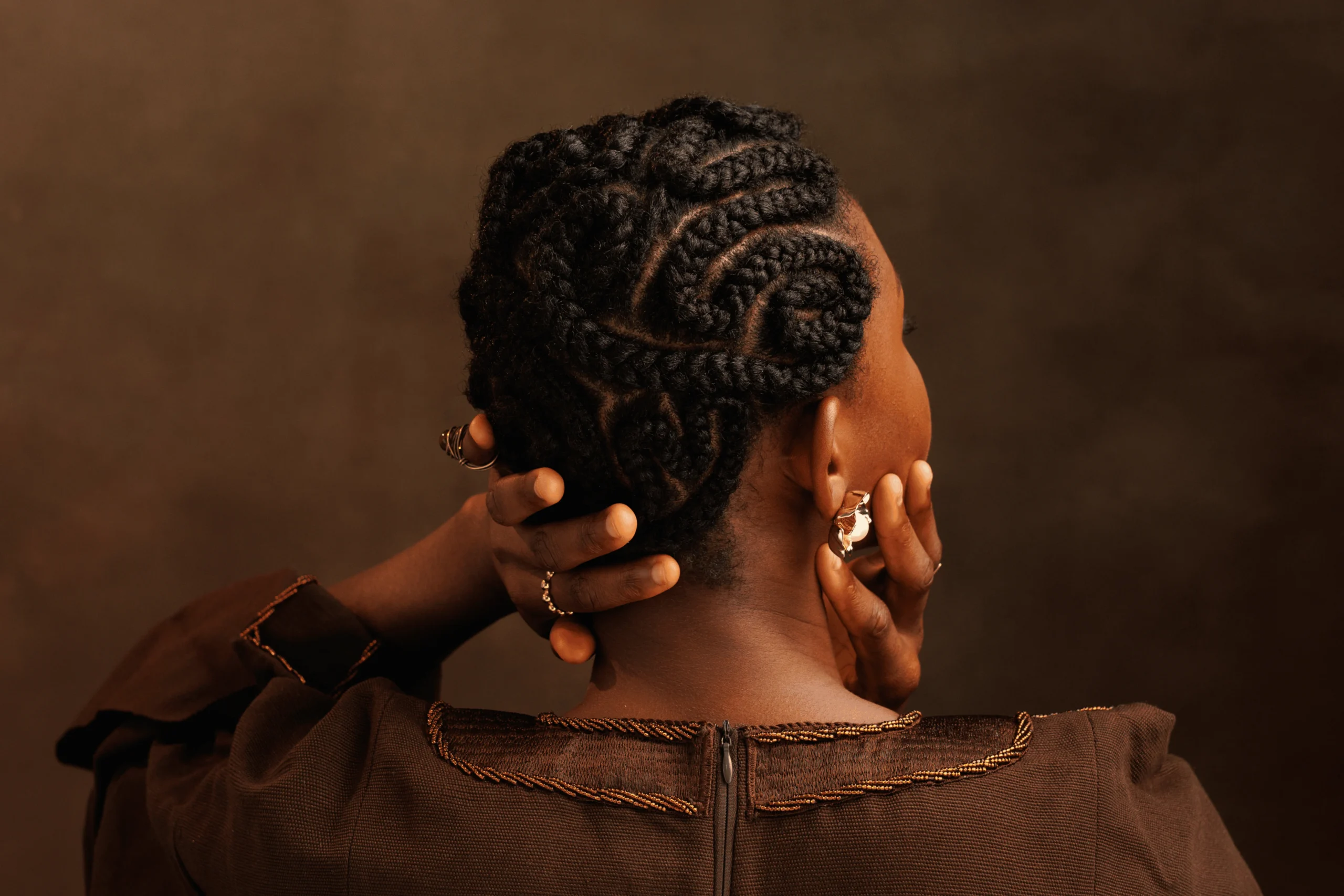
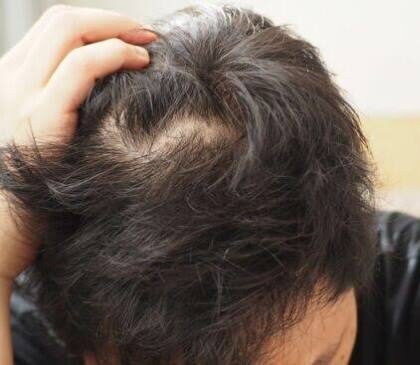
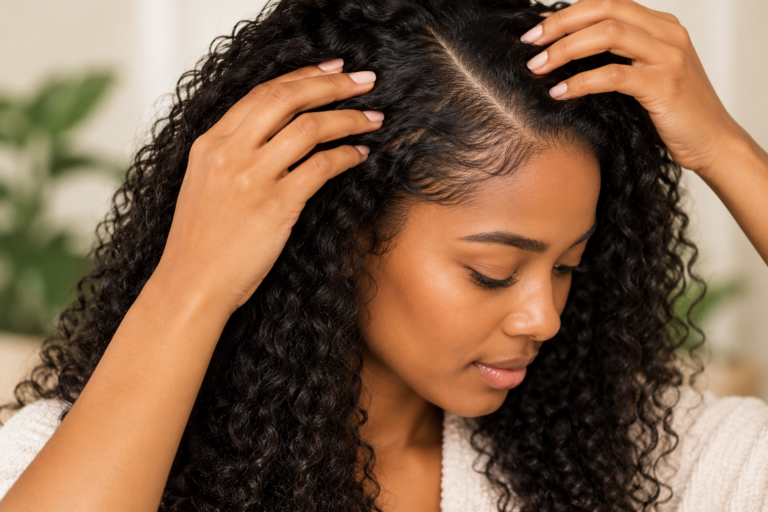
One of the biggest misconceptions about protective styling is that wash day pauses until the style comes out.
Your hairstyle may change.
Your scalp biology doesn’t.
Your scalp still sweats
Exercise, warm weather, hats, wigs, and everyday activity can all create moisture and sweat around the scalp.
That may influence how frequently you need to cleanse.
Product still accumulates
Oils, sprays, gels, edge products, and refreshers can build up over time.
If your scalp feels coated, repeatedly adding more products may not solve the problem.
Clean according to the installation
Different styles require different methods.
Braids may allow direct scalp cleansing.
Some wig routines allow more frequent access to natural hair.
Sew-ins may require more deliberate section-by-section cleansing.
Follow a method that cleans the accessible scalp without unnecessarily disturbing the style.
Watch the hairline
Hairline stress can be easy to ignore when the rest of the style looks good.
Check:
- temples;
- front edges;
- nape; and
- areas near clips, bands, adhesives, or tight braids.
Nighttime care still matters
Reducing friction and protecting the style at night may help maintain the look while reducing unnecessary manipulation.
Baby Hair® provides cosmetic hair-care and educational information. This content is not intended to diagnose, treat, cure, or prevent a medical condition and is not a substitute for individualized medical advice. Persistent, sudden, severe, or otherwise concerning hair or scalp changes should be discussed with an appropriate healthcare professional.